Checklist
What to Do Before Going to China
Last updated:
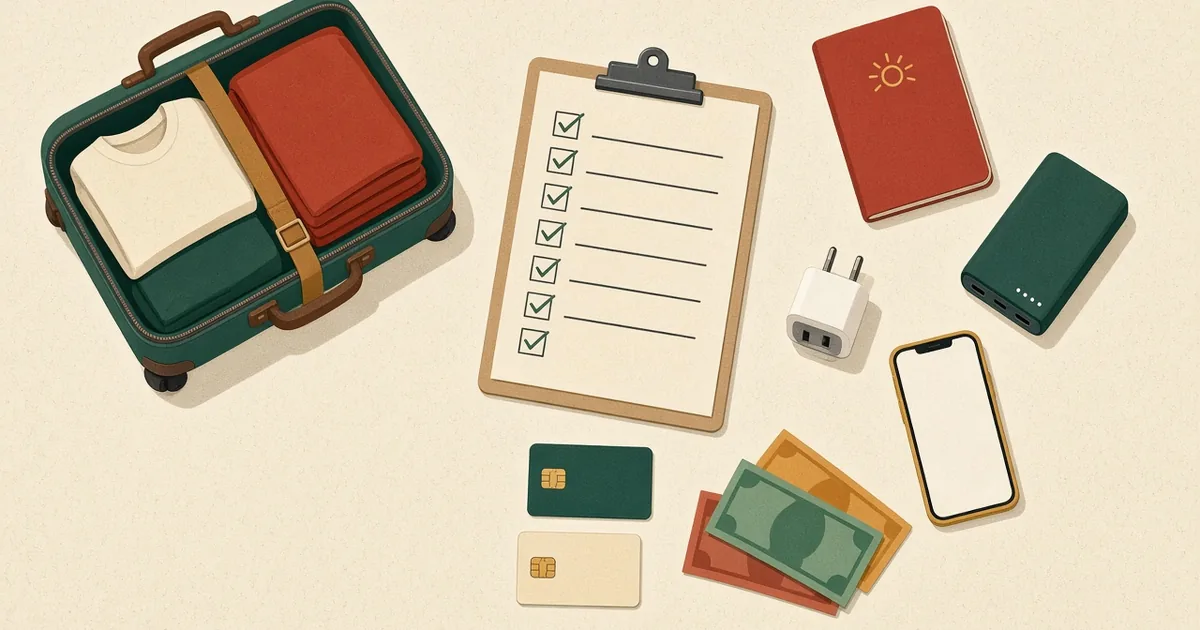
Before a first trip to mainland China, finish five jobs at home: confirm your entry path, fill the official arrival card, set up Alipay and WeChat Pay, install the apps you will actually open on day one, and arrange data that covers the mainland. Then keep a short list of backups — your home number for SMS, a physical card, some cash, and offline screenshots.
This page is the pre-departure hub. The detailed walkthroughs live on the visa, payments, apps, and eSIM pages linked below. Facts were checked against official sources on 14 November 2026. Rules and app screens change, so confirm the official pages before you book or pay.
The checklist at a glance
| Do this at home | Why it matters | Where the details are |
|---|---|---|
| Confirm passport type, dates, and entry path | 30-day visa-free, 240-hour transit, and a regular visa are different rules | Visa-free checker and the visa pages below |
| Fill the official arrival card | It is free; look-alike sites are not official | NIA official form |
| Set up Alipay and WeChat Pay with a foreign card | Much harder to fix at a taxi rank | How to set up Alipay |
| Install the day-one apps and keep your home number for SMS | Payments, maps, and rides depend on those logins | Apps to download |
| Arrange mainland data, not a Hong Kong-only plan | A Hong Kong eSIM usually stops at the border | Best eSIM for China |
| Pack backups: physical card, some cash, offline screenshots | Scans and data can fail | This page, section below |
1. Confirm your passport and entry path
Entry is not one rule for every visitor. Start with the passport you will actually carry (it must be an ordinary passport for the visa-free paths described here) and with your itinerary.
30-day unilateral visa-free entry currently covers 50 countries, including much of Europe plus the United Kingdom, Canada, Australia, Japan, South Korea, and others listed on the NIA 30-day list dated 17 February 2026. The United States is not on that 30-day list. For most of those 50 countries, the published window currently runs through 31 December 2026 at 24:00 Beijing time, as stated in embassy and visa-center notices (the NIA list itself does not print that end date). Brunei has no published end date. Russia has a separate window through 31 December 2027, confirmed by Foreign Ministry spokesperson Guo Jiakun on 20 May 2026 — that date is not an extension of the wider 48-country group. As of 14 November 2026, no official announcement has extended the UK, Canada, Australia, or wider 30-day list into 2027.
If you are on the 30-day list, a return trip home of up to 30 days can work under that policy. Country-specific pages:
- China visa-free UK
- Do I need a visa for China? for Canadian, Australian, European, and other passports
240-hour visa-free transit covers 57 countries, including the United States, and uses 65 designated ports in 24 provincial-level regions. You need an ordinary passport, a confirmed onward ticket with a date and seat to a different third country or region, and entry at a designated port. The clock starts at 00:00 the day after entry. Hong Kong can be a third region; a trip that returns to the same country, or Hong Kong–mainland–Hong Kong, is not transit. See China visa-free rules for U.S. citizens if that is your passport, and Entering China from Hong Kong if you will cross from Hong Kong.
If your stay is longer than the visa-free window, or your purpose is work, study, or news reporting, apply for the appropriate visa before you travel.
Run the visa-free checker as a first-pass screen, then confirm the official list. Border officers make the final decision.
2. Fill the official arrival card
The National Immigration Administration introduced free online arrival-card filling on 20 November 2025. Use only official channels. The official desktop form is https://s.nia.gov.cn/ArrivalCardFillingPC/. The NIA warning dated 5 December 2025 says the service is free of charge and warns about fake paid websites posing as the official platform. Official mini programs and the “NIA 12367” channels named in that warning are also valid; paid look-alike sites are not.
If you cannot complete the form before you fly, the same NIA warning says you can fill it on arrival with devices at the port, and that paper cards remain available. Do this early anyway, so you are not doing it in a queue with no signal.
3. Set up payments before you leave
Everyday spending in mainland China usually means a QR code in Alipay or WeChat. Set both up at home, on Wi-Fi, with your usual international phone number. You do not need a Chinese (+86) number.
The full Alipay walkthrough is how to set up Alipay with a foreign card before you fly. In short:
- Download Alipay and WeChat only from official app stores, not unofficial APKs.
- Register with a number that can receive SMS, and keep that number active while you travel.
- Link a foreign card. A Chinese Embassy payment guide lists UnionPay, Visa, Mastercard, JCB, Diners Club, and Discover for Alipay; American Express is listed there for WeChat Pay, not Alipay. The name on the card should match the name on the account.
- Complete passport verification when the app asks.
- After you land, make a tiny test payment so any bank fraud block shows up early.
Official WeChat and government guidance describe no service fee at 200 yuan or less, and a 3% fee above 200 yuan, for international cards. Government announcements in 2024 raised overseas-visitor mobile-payment caps to US$5,000 per transaction and US$50,000 per year. Alipay’s exact current per-account limits were not independently confirmed from an official Alipay help page; trust the confirmation screen in the app. Ignore older municipal pages that still quote US$1,000 / US$10,000.
4. Install the apps you will actually use
You do not need a long home screen. You do need the apps that get you from the airport to the hotel and through the first meal, already logged in. The full list is on what apps to download before going to China:
- WeChat and Alipay for messaging and payments
- DiDi for rides (Uber does not operate in mainland China)
- Amap or Baidu Maps — Google Maps is often a poor everyday map in China
- Trip.com for hotels, flights, and train tickets in English, if you use it
- A translation app with the offline Chinese pack downloaded
- Optionally: Dianping or Meituan, Xiaohongshu, 12306, your eSIM app, and your bank app
Register while your home number still receives texts. If you swap SIMs and lose that inbox, logins and payment codes get stuck.
5. Arrange data that covers mainland China
A Hong Kong-only eSIM or SIM usually stops at the border. If you use a travel eSIM, choose a plan that clearly covers mainland China, install it before you leave (you will need Wi-Fi to install it), and keep your home line on for SMS if your phone can run two lines.
Compare coverage, data routing, and plan types on best eSIM for China. Whether Google, Gmail, or WhatsApp still open depends on how the plan routes data, not on which Chinese apps you installed. International routing is a commercial feature, not an official exemption, and it is not guaranteed. Hotel Wi-Fi often follows mainland rules even when an eSIM does not.
Home-carrier roaming can also work if it covers the mainland and you have checked the cost. A local mainland SIM, bought in person at a carrier store with your passport, is a different product and usually follows local internet rules.
6. Backups to pack
- Home number for SMS, with roaming for incoming texts checked, if you use a data eSIM beside it.
- A physical Visa or Mastercard, and a second card if you have one, for hotels and larger merchants where the network logo is displayed.
- A modest amount of yuan cash, from an ATM that shows your card network’s logo, a bank branch with an exchange sign (bring your passport), or an authorised exchange counter, which are common at airports.
- Offline screenshots: hotel name and address in Chinese, booking confirmations, onward tickets if you are on 240-hour transit, and a photo of your passport bio page stored securely.
- The bank’s app, with notifications on, because the first China charge is often flagged.
A sensible order in the week before you fly
- Confirm the official entry path and your travel dates, especially if you will travel in January 2027 or later.
- Fill the official arrival card.
- Install apps from official stores and register WeChat, Alipay, and DiDi.
- Link cards, complete verification, and tell your bank you will be in China.
- Install a mainland-coverage eSIM or confirm roaming, and test that the home number still receives SMS.
- Save the first hotel in Amap or Baidu Maps, download the translation pack, and take the screenshots.
If you want the same sequence as a single printable walkthrough for the first 24 hours, the First-Time China Guide ($22) gathers the official-source steps in one place. It does not replace official lists, app screens, or a visa application.
FAQ
What should I do before going to China? Confirm your entry path, fill the official arrival card, set up Alipay and WeChat Pay, install the day-one apps, arrange mainland data, and pack backups.
Do I need a visa to visit China? It depends on your passport and itinerary. The 30-day list has 50 countries; 240-hour transit has 57, including the United States. Use the visa-free checker and the relevant visa page.
Is the China arrival card free? Yes, through official channels only. Ignore paid look-alike sites.
Can I set up Alipay and WeChat Pay before I fly? Yes. Do it at home on Wi-Fi, then test with a small payment after you land.
Will a Hong Kong eSIM work in mainland China? Usually not. See best eSIM for China.
Do I need cash if I have Alipay? Carry some yuan and a physical card as backups.
Sources
- NIA 30-day unilateral visa-free list (17 February 2026)
- Foreign Ministry spokesperson Guo Jiakun on extending Russia’s visa-free policy to 31 December 2027 (20 May 2026)
- NIA English interpretation of 240-hour visa-free transit (20 August 2026)
- NIA 240-hour visa-free transit country list (20 August 2026)
- NIA warning on fraudulent arrival-card websites, with the official fill URL (5 December 2025)
- Official China arrival card filling page
- Chinese Embassy in the United States, payment guide for visitors (PDF)
- WeChat Help Center, international cards
- gov.cn, “Payment service guide for overseas visitors to China” (11 April 2024)
Checked 14 November 2026.
This page is general travel information, not legal, visa, banking, or official advice. It is not affiliated with the National Immigration Administration, any embassy, Alipay, or WeChat. Confirm current rules and app screens with official sources before you travel.
Affiliate disclosure: some links on this site may be affiliate links (for example eSIMs or hotel bookings). We may earn a commission if you buy through them, at no extra cost to you. See the full disclosure.